Showing posts with label Serfronya. Show all posts

Monday, June 11, 2012

Free Public Domain Curriculum: An Old Fashioned Education


I am big on using public domain material in our homeschool. I often use several, PD (public domain) books each year. I touched briefly on this subject in the post about homeschooling on one income.  Today I want to share a free site with you that has been a great help to me for several years. You can find public domain curriculum for grades K - 11 at An Old Fashioned Education

Very Convenient
You can just follow the curriculum as is. As you'll see when you visit, everything is conveniently laid out for you. An Old Fashioned Education even includes 40 week schedules for each grade. Depending on how you homeschool, this may be of help to you. When I first began homeschooling I used to try to adhere to precise scheduling. But ultimately for us it turned out to be more of a burden than a help. So, today I would use this more as a guide. 

Friday, June 8, 2012

Returning to McGuffey Readers


I discovered McGuffey's Eclectic Readers years ago when I was looking for free resources to teach my oldest child Language Arts. These books were used in the American school system as textbooks for close to a century. My son enjoyed what he was reading and I liked how the stories taught morals and made references to God.


What I Wish I'd Known Then
However, when I attempted to use the readers I felt that it wasn't enough for a complete Language Arts program. My son would read the passages in just a few minutes and then it seemed that he was done. But I recently learned that you can use these texts for: reading comprehension, copy work, dictation, recitation, spelling, and studying poetry. 

There is a free guide available that teaches you how the originators of the readers intended for them to be used - The Eclectic Manual of Methods for the Assistance of Teachers. I read over the section on readers and it is now clear to me that these books can be our entire English curriculum. Also, I believe that they can be used in a way consistent with a Charlotte Mason style of homeschooling. 

Sunday, April 29, 2012

Hooray for Math Manipulatives


When I was learning arithmetic in public school I was taught to NEVER count on my fingers. And I mean NEVER! My teacher informed the class that was considered “cheating”. And apparently my mom shared her sentiment. Rote memorization was the only option. 


If It Ain’t Broke, Don’t Fix It
Thankfully, learning that way worked for me. And I never questioned it. So, when I began homeschooling I taught my oldest son basic math skills the same way that I had learned them. And he successfully memorized his math without “cheating” with his fingers.

Saturday, February 25, 2012

7 Great Homeschool Items You Can Buy at the Dollar Store


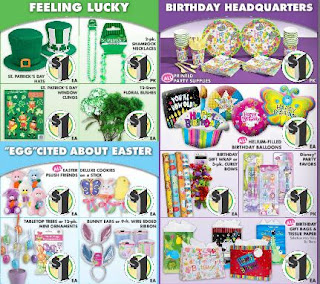
Let’s be honest. It can be challenging to find quality items at the dollar store. However, recently the children and I took a trip to our closest Dollar Tree; and, we came home with some good finds. Here are seven educational items that you can probably find at your local dollar store.
 
1. Puzzles
This is actually the main reason why I decided to make a Dollar Tree run the other day. My children were given some puzzles for Christmas and they have really been enjoying them. So, I decided to buy more so that they’d have some variety. We found puzzles ranging from 12 to 100 pieces. Some of them were even alphabet and number themed.

2. Coloring and activity books
My 7 year old picked out a Lion King themed addition and subtraction book. That surprised me because I figured he’d want something less “schoolish”. But that’s what he wanted and he came home and did several pages without being prompted to.

3. Reading books
We did not purchase any reading books because we make regular trips to the library. But at times my children have expressed an interest in owning some more of their own books. This could be accomplished inexpensively by picking up some books from the Dollar Store.

4. School supplies
It is less expensive to stock up on school supplies during all of the back to school sales. But if you run out of some things before the end of the year then you can get pencils,erasers, ink pens, rubber bands and more at the Dollar Store. And most of these items come several to a pack, making the purchase quite economical.

5. Arts and crafts supplies
You can find most of your typical supplies there, such as paint and crayons. A craft that the children have been wanting to do for awhile is to decorate their own t-shirts. I found youth ones for around $4 at a hobby store. But I’m glad I held out because I was able to find 3 blank t-shirt in various colors and in the right sizes for my 3 youngest children at the Dollar Tree. Now I only have to pay full price for one shirt.

6. Flashcards
I found flashcards for addition, subtraction, multiplication, and division. There were also cards that contained site words, the alphabet, shapes, and colors.

7. Posters
I was really impressed at the amount of large educational posters at the Dollar Tree. I started to look through them and make some selections. But then my eldest asked this great question, “Mom, where are we going to hang another poster?” Well, maybe next year I’ll rotate out the posters that we have hanging up now.
 
Serfronya Wallace
 
The six loves of Serfronya Wallace's life are God, her husband, and her 4 children - whom she homeschools. Serfronya enjoys sharing educational tips and writing about her family's homeschooling journey at Cookie's Domain.
 

Monday, February 13, 2012

Use Pinterest to Organize Online Homeschool Resources


Are you using Pinterest yet? I am. And I must say that I am finding the site to be fabulous beyond belief!

What is Pinterest?
By their own definition, “Pinterest is a virtual pinboard”. And that really is a very accurate description. You can use the site to organize all of the numerous sites that you come across online and want to be able to refer back to at some point.


What Does Pinterest Have to Do with Homeschool?
Well, the beauty of this site is that you can organize whatever type of boards that you want. This means that you can bookmark and categorize the various homeschooling and educational sites that you come across.

Use it Any Way You Want
I didn’t start out using Pinterest this way. Originally, I was pinning recipes, sewing tutorials, and craft projects for myself. But then I realized that I could make some homeschooling pinboards as well. So I created one called Homemade Fun for the Children. So far, I have pinned links to recipes for finger paint, bubble solution, clay, and a few more items that I plan on making in the coming weeks.

Organize Curriculum and Free Online Resources
I wish this site had been around years ago when I used to go to a dozen or so homeschooling sites to print out free worksheets for the children. I could have just created a pinboard specifically for that purpose. I don’t have need of that now. But I do plan on making a board for handicrafts, similar to this one.

Get Inspired by Others
You can set up each board so that only you can add pins to it. Or, you can make it open for others to add to as well. You just add the names of additional contributors when you set up your board. Also,  you can do a search and view other people’s pins. If you find a person who links to items that you are interested in then you can "follow" that individual. That way you'll be able to view their future pins.

Serfronya Wallace
 
The six loves of Serfronya Wallace's life are God, her husband, and her 4 children - whom she homeschools. Serfronya enjoys sharing educational tips and writing about her family's homeschooling journey at Cookie's Domain.

Thank you for following The Homeschooling Blog!

Saturday, February 11, 2012

Handicrafts in Homeschool


I know that cutting, pasting, and creating artwork is a big part of elementary school. Each year we definitely go through our share of construction paper, glue, glitter, and all things craft related. But I often run into the dilemma of what to do with all of the work that my children create. With 4 kids being homeschooled, it just isn’t practical to hold on to the hundreds of pieces of paper that they craft.

What to Do?
What I used to do was to display their work for a week. I would either put it on the fridge with magnets or pin it up to the bulletin board in the school room. The work would hang there until Friday and then the children knew that it would be taken down to make room for new work the following week. This system worked pretty well. But, a couple of my kids got very hurt feelings knowing that their work would eventually be thrown out.

A More Permanent Solution
That made me want to find a way for the children to be able to make something that they wouldn’t feel was a “throw away”. So, I was happy when I found out that in the Charlotte Mason approach - which we’re currently using - she believed in the children doing handicrafts.

What a Handicraft Is
In her Home Education book, Mason points out the specifics of handicrafts. Handicrafts should not “be employed in making futilities such as pea and stick work, paper mats, and the like”. She instructed parents that the children should be “taught slowly and carefully what they are to do” and that “slipshod work should not  be allowed.” And she specified that “the children's work should be kept well within their compass.”

In today’s English I believe Charlotte Mason was saying that:
  • what the children make should be useful;
  • the children need to be taught the craft;
  • children need to be encouraged to do their best work;
  • and, you shouldn’t try to teach your children a skill that they’re not ready to handle yet.
Handicrafts in Our Homeschool
So, I have begun teaching my 6 year old daughter to crochet and to knit. Right now she is using her fingers but eventually I’ll teach her how to use a crochet hook and a knitting loom. She has made numerous bracelets and headbands for herself, family members, and her dolls.

My eldest son paints with watercolor. He also draws comic strips, which he keeps in a binder. And recently he has combined the two art forms to make comics which he paints with watercolor. I’m still working on finding out what my 7 and 4 year olds are interested in.

Here is  a list of handicrafts and life skills that might fit into your homeschool.

Serfronya Wallace
 
The six loves of Serfronya Wallace's life are God, her husband, and her 4 children - whom she homeschools. Serfronya enjoys sharing educational tips and writing about her family's homeschooling journey at Cookie's Domain.


Thank you for following The Homeschooling Blog!

Monday, February 6, 2012

Homeschooling on One Income


When my husband and I married almost 9 years ago, we agreed that I would stay home with the children. A couple of years after that I became a homeschooling stay at home mom as well. Since marriage, I have never worked outside of the home and I wanted to share some tips on how we homeschool within our means.

1. We borrow hundreds of books a year from the library. This is no exaggeration. Our library has a check out limit of 50 books for a lending period of 21 days. So every 3 weeks we check out the maximum number of books. Just this one resource alone is invaluable to us.

2. I use public domain books found on the internet. There are thousands of free books available for downloading or reading on Google Books and Archive.org. I printed off and bound primers and readers to give my children a strong foundation in reading once they learned phonics. They learned phonics from library books and Starfall.com (also free).

3. We use non-consumable textbooks. Once my oldest started middle school I felt that he needed textbooks to continue on his educational journey. But I have 3 more children that will eventually need those books as well. So, I applied a great approach that the public schools use. I pass down the books to the next year’s student and the children are not permitted to write in them at all.

4. I buy used books. Those non-consumable textbooks that I mentioned, whenever possible I try to buy a used copy in good condition from Amazon. At the beginning of the school year I was able to get a Pre-Calculus book and a Chemistry book for under $11 (total) for my 10th grader.

5. We use free video courses available online. You can find several at  Learner.org and M.I.T.’s open coursework site. Those books that I bought for my son, he uses those to go along with the Chemistry course on Learner.org. And, his Pre-Calculus class is taught by an M.I.T. professor - courtesy of the internet. For Spanish II, he’s using the 52 week video course Destinos. There are practice lessons to go along with the course on the site, so there was no need to purchase a textbook.

Aside from the $11 I mentioned above, the only cost for our homeschool this year has been for: basic school supplies, gas to go to the library, printer paper, and ink cartridges for our printer. It takes some planning and extra prep work, but it is possible to homeschool almost for free.

Serfronya Wallace

The six loves of Serfronya Wallace's life are God, her husband, and her 4 children - whom she homeschools. Serfronya enjoys sharing educational tips and writing about her family's homeschooling journey at Cookie's Domain.

Thank you for following The Homeschooling Blog!

Friday, February 3, 2012

A Free Approach to Teaching U.S. History in Homeschool


My oldest took U.S. History a few years ago when he was in the 7th grade. I was concerned about how we would approach that subject since I have never been particularly interested in History in any form. I think part of the reason for that is because it was taught in such a dry way (from a textbook) when I was in school. I didn’t want that to be the case for my son as well. So, I prayed and considered a few ways to go about it. What we ultimately ended up doing worked very well and I would like to share it with you.

I purchased a book that gave very brief accounts of major events in U.S. History. And I used that book as a guide to know what to learn, and in what order. Then during our weekly library trips, I would let my son pick out any books he wanted that pertained to the following week’s History topic. For example, for the Industrial Revolution I let him pick out ANY book or books that looked interesting to him. Because it was his choice, he found very informative and entertaining books.

Sometimes he would get so into a topic that we would get more books the following week and extend the lesson. Those were also times that I would tell him to do a project on the topic. Again, I left it up to him. But I was available to offer suggestions if he was having a hard time coming up with something. Other times, he wasn’t very amused with that particular topic so we moved on quickly.

My son also kept a timeline so that he could refer back to what he learned later on. I used Donna Young’s approach for that. Like I said, I did purchase a U.S. History book, so the way we did it wasn’t completely free. But you can use a timeline online, like this one from Wikipedia. And then the subject wouldn’t have to cost you a dime. We did not cover every major event, time didn’t permit that. But my son did learn a lot about the history of our country that year. He sometimes discusses what he learned with others who also share an interest in U.S. History.
    Serfronya Wallace
     
    The six loves of Serfronya Wallace's life are God, her husband, and her 4 children - whom she homeschools. Serfronya enjoys sharing educational tips and writing about her family's homeschooling journey at Cookie's Domain.

    Thank you for following The Homeschooling Blog!

    Sunday, January 22, 2012

    Free Bible Curriculum for Homeschool: Using What Works


    Today I want to share a few free Bible curriculum that we have used  in our homeschool over the years. We have tried more than these. But the following Bible lessons have worked very well for us.

    When my children were pre-readers or just beginning to read I used DLTK’s Bible lesson plans. I’d print out the coloring pages or the mini books and have the children work on those while we listened to the passages of scripture from our dramatized audio Bible. (Nowadays we listen to the Bible on my smart phone using a free app.) And I’d ask the children a few questions to see if they understood the lesson. This worked very well when I had 3 that were all very small at the same time.

    Once the children were reading and writing we switched to Calvary Chapel’s children’s curriculum. This site offers free lessons for over 200 Old Testament Bible stories and 175 New Testament ones. What is so great about this curriculum is that each lesson has a coloring page, fill in the blank pages, a crossword, a word search, and possibly an additional activity that helps reinforce the lesson. My oldest used this until he was about 8 years old. But then he came to me and said he felt that he was too old for the lessons.

    So now he uses  Padfield.com’s Bible Curriculum. He reads the passages himself and does all of the work on his own, which he prefers. Sometimes he’ll ask me questions about his studies or we’ll have some discussions about the Word of God in general.

    Since changing over to a more simplified way of doing school a few months back, I have switched to a Charlotte Mason approach to Bible study with my 3 youngest. I use this reading list and read one Bible story a day. Then the children are free to discuss it if they wish, but I do not prod them to.

    Hopefully one of these Bible curriculum will be useful in your homeschool as well.


    Serfronya Wallace
      The six loves of Serfronya Wallace's life are God, her husband, and her 4 children - whom she homeschools. Serfronya enjoys sharing educational tips and writing about her family's homeschooling journey at Cookie's Domain.

      Thank you for following The Homeschooling Blog!

      Thursday, January 19, 2012

      Flashcards are Your Friends


      Flashcards are one of my absolutely favorite educational tools. They are the best for learning tables in math. But I have also used them to help the children learn theirs letters and colors as well. I’m sure I will find many other ways to use them in the future.

      Anyone Can be the Teacher
      One of the best things about using flashcards is that anyone who already knows the material on the cards can help the person who is learning. For example, when my daughter was only 4 years old she would sit next to her 2 year old brother and help him learn his colors. Anytime he got to a color he didn’t know, she would tell him what it was and then he would repeat after her.

      You Can Use Them Anywhere
      A lot of times I have the children pull out the cards when I am preparing breakfast or lunch. They either sit on the couch and help each other learn. Or, I have them stand next to me in the kitchen and I’ll help them with the cards while I cook. For whatever reason, this has worked remarkably well with the children learning their addition tables. Maybe it’s because it doesn’t seem so “school” like to recite math problems while Mom bakes up some muffins for you.

      Flashcards are Inexpensive
      For the cards to teach colors, I just cut pieces of construction paper into rectangles and labeled them. All the rest of our flashcards I have found for free on the internet. You might be amazed at what you can find printable flashcards for. Just a quick search on Google will do the trick.

      Flashcards are Easy to Make
      I print them out, cut them up, and laminate them. I also hole punch the tops of the cards and keep them on a ring. That way they can be turned easily; and, I don’t have to be concerned about any of the cards getting lost. The lamination ensures that the cards can be passed down to the next child, when the time comes. You can purchase an inexpensive laminator from one of the big box stores or Amazon. I bought laminating sheets in bulk years ago and I am still on the same box.

      Even though the children only use the cards for a few minutes a day, that seems to be all it takes. Sometimes they will ask to pull out their cards on their own without being told to. I love when that happens!
       
      Serfronya Wallace

       
      The six loves of Serfronya Wallace's life are God, her husband, and her 4 children - whom she homeschools. Serfronya enjoys sharing educational tips and writing about her family's homeschooling journey at Cookie's Domain.


      Thank you for following The Homeschooling Blog!

      Sunday, January 15, 2012

      To Homeschool or Not to Homeschool When Family is Sick


      My eldest hasn’t been feeling well since Monday. And over the course of the week that sickness has been contracted by 2 of my other children; and 2 days ago, I started feeling bad as well. So once again, the question had to be answered as to whether or not we should attempt any schooling.

      A Hard Taskmaster
      In past years this was a tough decision for me to make. Everyone had a certain amount of school work to be completed each day or else that child would “fall behind”. I was very determined to make sure that every page of every school book was covered before the end of the year. I was still stuck in “traditional school” mode.

      Homeschool Isn’t About Completing a Curriculum
      But I am happy to report that I have relaxed A LOT about homeschool lately. My younger children now have goals that we strive to meet by the end of year such as: learning phonics or improving their reading skills, learning their addition and subtraction tables, improving their handwriting, etc. I don’t use a set curriculum with them anymore. We just use whatever materials work to help us achieve our goals. We keep our lessons short, focused, and as engaging as possible.

      Taking Sick Days is OK
      So now  if we need to take some days off - or even a week - to recover from illness, then it’s not a big deal. My oldest does use textbooks. But if he’s sick then I let him rest and we rework his assignment due dates once he’s well. Some work may be combined or possibly skipped if he already has a solid understanding of it.

      Netflix to the Rescue
      If any of the children still want to have school then we may watch an educational video or 2 on Netflix and then discuss what we learned afterwards. But that’s about it. I want the children to have all the time they need for their bodies to recover without them having to worry about making up work or falling behind.

      Serfronya Wallace
       
      The six loves of Serfronya Wallace's life are God, her husband, and her 4 children - whom she homeschools. Serfronya enjoys sharing educational tips and writing about her family's homeschooling journey at Cookie's Domain.

        Thank you for following The Homeschooling Blog!

        Friday, January 13, 2012

        5 Ways to Take the Frustration out of Handwriting in Your Homeschool


        My 7 year old was having a terrible time with handwriting. He would get so frustrated every time he had to practice. I had tried handwriting worksheets. But that was upsetting for both of us. Then I switched to copywork and that was working a little better, but handwriting time still wasn’t that great. 


        Don’t Re-Invent the Wheel
        I started thinking back to when I was teaching my oldest to write. And I wondered why those frustrations never came up. Yes, all children are different, but; handwriting really was a non-issue with my eldest. Then I realized that with him there was no “formal” handwriting training. I just started having him write things for me once he showed an interest in it. So, a few months ago I switched to using the five ideas listed below with both my 6 and 7 year old. And everyone is much happier now.


        Informal Handwriting in Your Homeschool
        1. Have the children write lists for you. For example, you can ask them to write a list of school supplies they need, your grocery list, or a list for Daddy that he’ll need when he goes to the hardware store. They may even come up with lists of their own.
        2. Write letters to family members. My children are always excited to write to Grandma and Grandpa, who live in a different state.
        3. Send postcards if handwritten letters are too much for your child right now. To help ease my son into informal handwriting, I had him write on a postcard to his grandparents. He only wrote “I love you” and signed his name. But I told him to take his time and do his best work since it was for his grandparents. And he did.
        4. Have the children write titles for or label the pictures or artwork that they make. Again, this isn’t a lot of writing but it’s still practice.
        5. Give the children “how many words in ____________” activity sheets. For example, in my son’s comic coloring and activity book their is a page that asks how many words can be made from the word “Spider Man”. My son spent a great deal of time coming up with words and writing them down. 


        I Still Have Standards
        My only requirements with this method is that the children hold their pencils correctly and that they must write to the best of their ability. If they don’t know how to spell a word or how to form certain letters correctly then I’ll write it out for them and then have them copy it onto whatever they are working on. I still check all of their writing and have them rewrite letters, if they aren’t formed correctly. But since the children are now writing something fun or useful,  the frustration has disappeared.


        Serfronya Wallace
         
        The six loves of Serfronya Wallace's life are God, her husband, and her 4 children - whom she homeschools. Serfronya enjoys sharing educational tips and writing about her family's homeschooling journey at Cookie's Domain.
         
        Thank you for following The Homeschooling Blog!

        Friday, January 6, 2012

        Using Netflix in Your Homeschool


        Originally, my husband and I decided to subscribe to Netflix so that we would have movies to watch for ourselves. But I quickly discovered that this video streaming service is a goldmine of educational programming. So much so, that my elementary aged kids are currently using Netflix exclusively for their Science class.

        I found Beakman’s World and originally I was going to use the half hour show to supplement Science class. But since revamping our homeschool in November and taking a more simplified approach to my children’s learning, I figured the show itself might be enough. And so far, so good.
        The children enjoy the program so much that they are just gushing to tell me what they learned after watching it. I listen and let them share as many details as they want. Then I ask what fact they'd like to draw a picture of and put a short description of in their notebooks. Then I let them have at it. So far, they have been notebooking about such scientific topics as volcanoes, gravity waves, and the storm spot on Jupiter.
        Here are some tips on how to use Netflix in your Homeschool.


        1. Subscribe to the streaming service, if you haven’t already. It’s under $9 a month. That’s much lower than the library late fees I used to incur from overdue DVDs.
        2. When you are on the Netflix website do a search for “PBS”, “Discovery Channel”, “National Geographic”, and “History Channel” to find a lot of educational goodies.
        3. Put the programs that you are interested in into your queue so that you don’t have to search for them again later on.
        4. Decide which programs will become a part of which subjects in your homeschool.
        5. Have your children watch them and enjoy!


        Serfronya Wallace
         
        The six loves of Serfronya Wallace's life are God, her husband, and her 4 children - whom she homeschools. Serfronya enjoys sharing educational tips and writing about her family's homeschooling journey at Cookie's Domain.

          Thank you for following The Homeschooling Blog!